
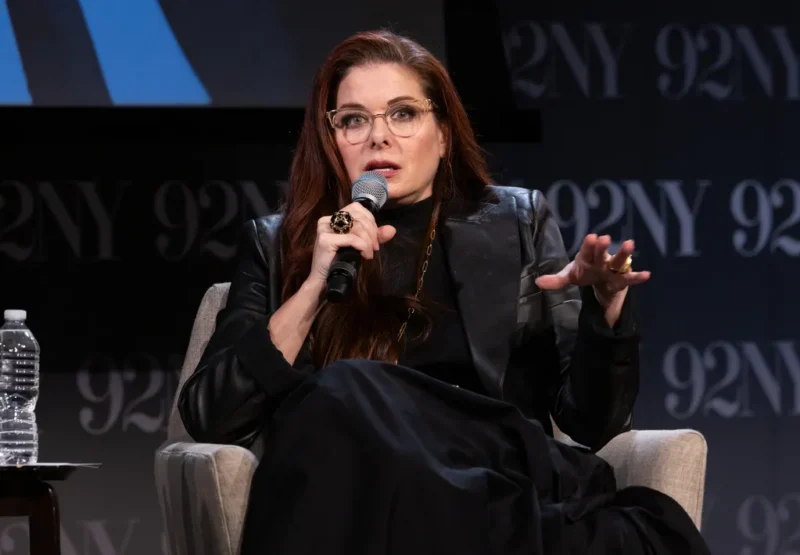
A-List Star Unloads On Pro-Palestine Hypocrites
It wasn’t a passing comment or an offhand remark. Debra Messing chose her words carefully, and she delivered them with a level of certainty that left little room for ambiguity.
In a podcast appearance released Tuesday, the actress took direct aim at what she described as a glaring contradiction among anti-Israel activists. Her focus wasn’t just on criticism of Israel—it was on what she sees as a selective silence when it comes to Iran. For Messing, that contrast is not incidental. It is, as she put it, “the boldest example of hypocrisy.”
The argument she laid out is rooted in timing and attention. Since the Oct. 7 Hamas attacks, activism surrounding Israel has been loud, visible, and persistent across social media and public demonstrations. But when the conversation shifts to Iran—particularly its government and actions—Messing argues that many of those same voices go quiet.
That absence, in her view, reveals something deeper than disagreement. It suggests a willingness to engage only when it fits a specific narrative.
Her comments came during a broader discussion about how her public stance has evolved over the past year. Messing, long associated with progressive politics, described Oct. 7 as a turning point that removed any hesitation she once had about speaking out. Since then, she has taken a far more active role in defending Israel and addressing what she sees as misinformation surrounding the conflict.
Initially, she approached that effort with a specific goal: to inform. She described using social media to share historical context, details about Hamas, and information about groups like the Iranian Revolutionary Guard Corps. But that effort, she said, quickly ran into a wall. The environment, in her telling, was not receptive to debate or clarification.
Instead, she encountered a wave of backlash that she described as intense and deeply personal. The criticism, she said, often crossed from political disagreement into hostility, shaping how she now engages online. Her instinct, she admitted, is still to respond and defend her position, but the tone of the reactions has made that increasingly difficult.

Woven into her remarks was a more personal thread. Messing spoke about her upbringing and the discomfort she felt expressing her Jewish identity as a child, describing a long-standing sense of caution that followed her into adulthood. That context, she suggested, informs the urgency behind her current advocacy.
Her critique of activist silence on Iran stands as the sharpest edge of the interview. It reframes the debate from one about opposing viewpoints to one about consistency—who speaks, when they speak, and what they choose not to address.