
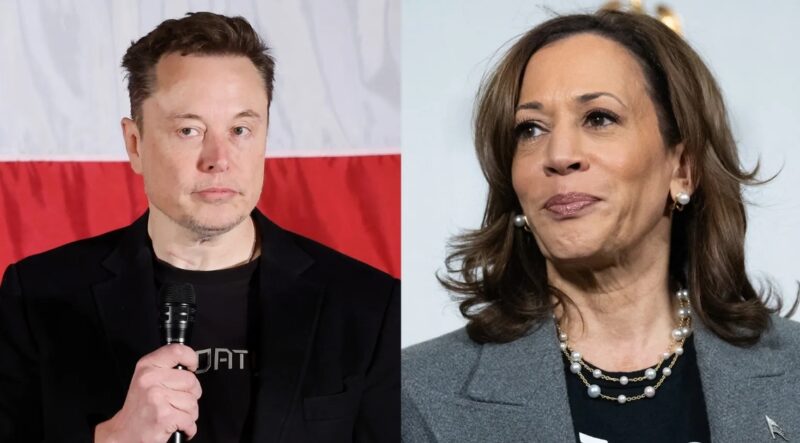
Harris Discusses Biden Decision Regarding EV Event
In the quiet corridors of political history, small slights sometimes echo louder than shouted policies.
Former Vice President Kamala Harris is now adding her voice to that echo, pulling back the curtain on what she sees as one of the Biden administration’s early miscalculations — the snubbing of Elon Musk during a high-profile 2021 White House event on electric vehicles. A misstep that, according to Harris, may have cost more than a photo op. It may have shifted the political loyalties of one of the most powerful men in American industry.
It’s all spelled out in her memoir, 107 Days, where Harris goes beyond the usual memoir platitudes and takes direct aim at a decision that puzzled many at the time: why was Tesla, the largest EV manufacturer in the United States — the very company leading the charge in electrifying the auto industry — not given a seat at the table?
Instead, President Biden chose to showcase General Motors, Ford, and Stellantis, all heavily unionized, all deep-rooted in traditional auto manufacturing, and all politically aligned with organized labor — a critical Democratic constituency. The message, whether intended or not, was clear: unions over innovation.
Jen Psaki, then the White House press secretary, didn’t do much to soften the optics. Her comments about “the three largest employers of the United Auto Workers” seemed to confirm what critics suspected — this wasn’t about electric vehicles, it was about political signaling. And Musk got the message. Loud and clear.
According to Harris, the decision to exclude Musk was “a big mistake,” one she believes wasn’t just bad optics but also poor strategy. “Presidents should put aside political loyalties,” she argued, especially when the stakes are technological leadership and national competitiveness.
Musk’s reaction was swift and enduring. From sarcastic posts on social media to pointed public criticisms, the Tesla and SpaceX CEO made it clear he hadn’t appreciated being sidelined. That grudge may have metastasized into something much larger.

Fast forward to 2024, and Musk is not just a critic of Biden — he’s one of Donald Trump’s most prominent financial backers, having reportedly poured $300 million into Republican efforts.
Harris’ revelation paints a picture of political miscalculation with far-reaching consequences — one where ideology may have blinded leadership to the obvious. When the administration chose union loyalty over tech leadership, it didn’t just alienate a billionaire. It potentially pushed him straight into the arms of their opposition.
Now, with Musk firmly entrenched as a Republican power player and the EV race heating up globally, that one missing chair at a White House event feels a lot heavier than it did back in August 2021.