
Memo Discovered In Investigation Raises Eyebrows
Newly revealed internal White House documents and communications are raising fresh questions about who was truly making decisions in the final year of Joe Biden’s presidency—and whether the man in the Oval Office was even reading what he was signing, let alone authoring it.
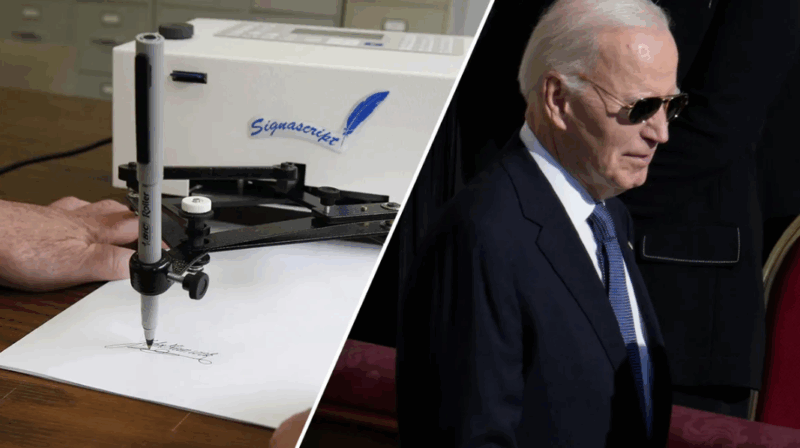
According to a string of memos, emails, and draft correspondence uncovered by Just the News, a striking pattern emerges: by 2024, then President Biden’s use of the autopen was no longer a matter of convenience—it had become standard procedure.
This mechanized signature was affixed to everything from routine proclamations to controversial clemencies, with aides scrambling behind the scenes to document—retroactively—what the president “intended” to do.
One February 2024 draft memo circulated by the White House Counsel’s office noted how delays in securing Biden’s signature on clemency packages had prompted a shift: Vice President Kamala Harris’s approval was becoming “sufficient” for presidential authorization. The shift from Biden’s personal review to delegated sign-offs became more routine, with staff citing his schedule and limited availability.
What began as bureaucratic flexibility, however, soon looked a lot more like delegation by default. One email from White House Staff Secretary Stef Feldman, dated January 16, reveals concern over the lack of a paper trail: “The president doesn’t review the warrants,” she writes. The solution? A written attestation from a deputy assistant stating that the documents “accurately reflect” what Biden meant to approve.
Among the more eyebrow-raising revelations: nearly all of Biden’s pardons and commutations between December and January—thousands in total—were signed not by the president’s hand, but by autopen. And that included controversial figures like Dr. Anthony Fauci, Gen. Mark Milley, and even family members. Only the preemptive pardon for Hunter Biden appeared to have been physically signed.
More troubling still are the clemency decisions involving inmates with serious charges—illegal firearms possession, and in some cases, ties to the deaths of law enforcement officers. These cases were part of a massive commutation wave for more than 2,500 prisoners, ostensibly aimed at addressing crack cocaine sentencing disparities. But the internal confusion over who authorized what, and when, underscores a deeper issue.

According to Just the News, four key meetings during the clemency wave were said to involve Biden giving “verbal approval”—but the National Archives had no notes confirming his presence, let alone his decisions. The Trump White House, which is reportedly investigating whether Biden’s aides crossed a constitutional line by exercising presidential powers themselves, argues this points to a deliberate effort to “deceive the public about Biden’s mental state.”
Of course, Biden’s defenders aren’t buying it. One former White House staffer pushed back, accusing Republicans of “willful blindness” about the clemency process. But even that defense fails to explain why documentation of Biden’s direct involvement is so thin—and why top aides were improvising “blurb” suggestions to retroactively confirm what the president intended to do.