
Newsom’s Wife Concerned By Sons Behavior
The remark itself was brief, but the reaction to it has been anything but.
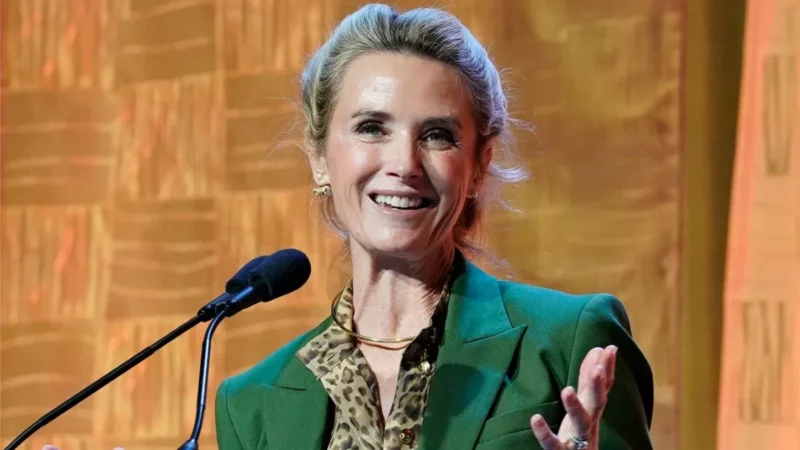
Jennifer Siebel Newsom, speaking at a policy-focused summit months ago, described a trend she said she was observing among young boys—particularly those spending significant time online—drifting toward more conservative viewpoints. At the time, she framed it cautiously, even acknowledging she was trying to avoid sounding overtly political, but the underlying concern was clear.
What stood out in her comments was not just the observation, but the personal angle. She pointed to her own household—one she described as firmly progressive—and said even there, her son was encountering ideas that prompted questions, including discussions about figures like Andrew Tate. That moment, as she described it, was unsettling not because of disagreement alone, but because of how quickly and directly those influences were reaching younger audiences through digital platforms.
Her broader point tied back to policy. The concern wasn’t framed strictly as partisan drift, but as exposure to what she characterized as harmful or restrictive ideas about gender roles and relationships.
In her telling, the issue wasn’t simply that boys were becoming more conservative—it was that certain online spaces were presenting rigid, often combative views about masculinity and women, and doing so without meaningful oversight.
That concern aligns with the legislative push she referenced. California has already moved forward with measures aimed at tightening safeguards for minors online, including age verification requirements and features designed to limit prolonged or potentially harmful engagement. The intent, according to her office, is to place more responsibility on tech companies to monitor and manage the type of content reaching younger users.
A spokesperson later clarified that her comments were directed less at political ideology itself and more at the behavior and messaging found in some online communities—particularly those that normalize hostility toward women. The argument is that repeated exposure to that kind of content can shape attitudes in ways that extend beyond the screen.

At the same time, the resurfacing of her remarks has drawn attention for a different reason. Critics have focused on the implication that a shift to the political right is inherently problematic, rather than separating that from the specific concerns about online behavior she later emphasized. That distinction—between ideology and influence—has become the central fault line in how her comments are being interpreted.
Layered onto this is a separate clip that has also circulated, showing Siebel Newsom discussing how she encouraged her sons to play with dolls as a way to reinforce caregiving as a shared responsibility. That example, while unrelated to the summit remarks, has been folded into the broader conversation about parenting, gender expectations, and the role of cultural messaging in childhood development.