
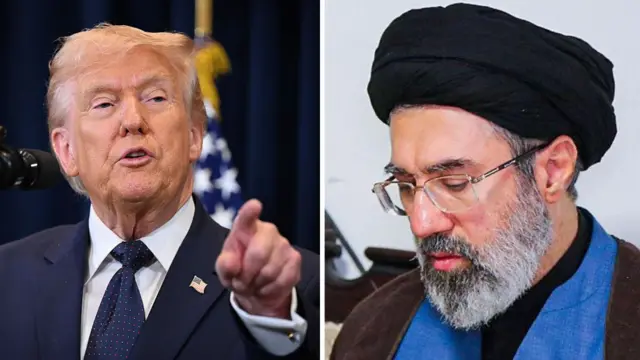
Trump Comments On Iran Supreme Leader Report
The exchange was brief, but it landed with weight. During a group interview on Fox News’ The Five, President Donald Trump was asked directly whether U.S. intelligence had informed him that Iran’s new supreme leader, Mojtaba Khamenei, might be gay.
Trump didn’t dismiss it. Instead, he acknowledged that such information had been mentioned in briefings, adding that it wasn’t limited to a single source and that “a lot of people are saying that.”
That response followed earlier reporting from the New York Post, which cited unnamed intelligence officials and sources close to the White House. According to those accounts, the information presented to Trump was treated seriously enough to be included in classified discussions, though the claims themselves remain unverified publicly.
The same reporting described reactions inside those briefings, including laughter among officials, a detail that underscores how unusual the subject matter is in the context of high-level intelligence.
The backdrop to all of this is Iran’s political and legal structure. The country operates under a strict theocratic system where same-sex relationships are criminalized, with severe penalties that have been widely documented. Within that framework, even the suggestion of such allegations involving a top leader carries political implications, regardless of their accuracy.
Additional claims cited in the reporting include alleged past relationships and references to older diplomatic cables, including one published by WikiLeaks that mentioned medical treatment in the United Kingdom. Those documents did not make any conclusions about sexual orientation, but they have been folded into the broader narrative now circulating in media and political discussions.
Mojtaba Khamenei’s rise to power earlier this month followed the death of his father, Ayatollah Ali Khamenei. Reports have indicated that his succession was not universally supported within Iran’s leadership structure, adding another layer of internal tension to an already volatile situation.

Trump, in the same interview, shifted quickly from the intelligence discussion to political commentary, including remarks about his support among gay voters and criticism of activist movements he disagrees with. The pivot highlighted how the issue is being handled not just as intelligence, but as political messaging.
At the same time, the administration remains engaged in high-stakes negotiations with Iran following weeks of military escalation involving U.S. and Israeli forces. Those talks, focused on shipping routes and nuclear policy, continue to move forward in parallel with the controversy surrounding Iran’s leadership.