
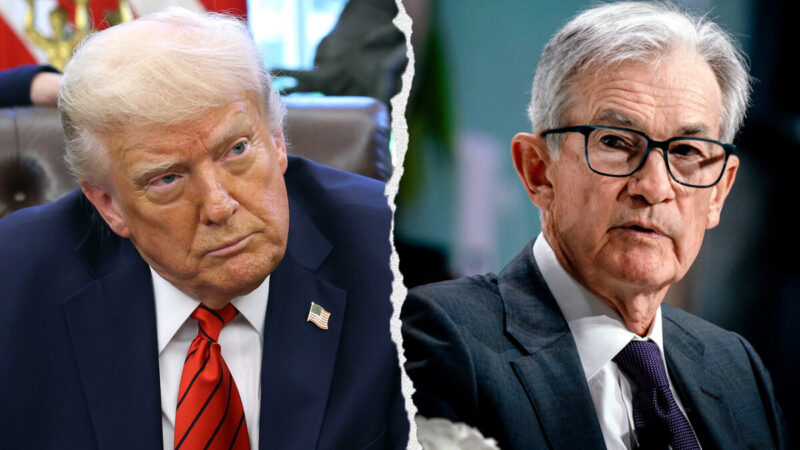
Wall Street Is Desperate For The Trump – Powell Feud To End
The standoff between President Donald Trump and Federal Reserve Chairman Jerome Powell is escalating into a high-stakes institutional conflict, drawing concern from Wall Street leaders who fear prolonged uncertainty could destabilize already fragile financial markets.
At the center of the dispute is Powell’s insistence that his role at the Federal Reserve does not end with his tenure as chairman. While his term in that position is nearing its conclusion, Powell has made clear that he retains the legal authority to remain on the Fed’s Board of Governors through 2028. In recent remarks, he emphasized that any decision to step down entirely would be guided by what he believes best serves the institution, signaling no immediate intention to yield under pressure.
That position directly clashes with President Trump’s objective to remove Powell from influence altogether. The administration has continued to back an investigation into the Federal Reserve’s $2.5 billion headquarters renovation, a project critics have labeled excessive. Powell has denied any wrongdoing, but the probe—led by U.S. Attorney Jeanine Pirro—has become a focal point in the broader effort to challenge his leadership.
Wall Street executives are increasingly uneasy. Behind closed doors, senior financial figures have been urging Treasury Secretary Scott Bessent and other White House officials to defuse the situation. Their concern is not abstract. Markets are already contending with geopolitical strain, including tensions tied to Iran, and the prospect of a drawn-out power struggle at the central bank introduces another layer of risk.
The uncertainty is compounded by delays in confirming Kevin Warsh as Powell’s successor. Warsh, widely viewed as aligned with the administration’s economic priorities, has yet to secure Senate approval. Senator Thom Tillis has indicated he will not support moving forward with the nomination while the investigation into Powell remains active, effectively freezing the transition process.
Inside financial circles, the assessment is blunt. Some executives describe the conflict as unnecessary and counterproductive, warning that it threatens to undermine confidence in U.S. monetary policy.
Others suggest a resolution is possible if the investigation is dropped, which could prompt Powell to step aside entirely. Absent that, Powell appears prepared to remain on the board, preserving his influence over interest rate decisions and broader policy direction.

The underlying issue extends beyond personalities. The Federal Reserve’s independence has long been considered a cornerstone of economic stability. Powell’s allies argue that the current pressure campaign risks eroding that principle by tying monetary policy leadership to political objectives, particularly amid ongoing disagreements over interest rate strategy.
The underlying issue extends beyond personalities. The Federal Reserve’s independence has long been considered a cornerstone of economic stability. Powell’s allies argue that the current pressure campaign risks eroding that principle by tying monetary policy leadership to political objectives, particularly amid ongoing disagreements over interest rate strategy.