
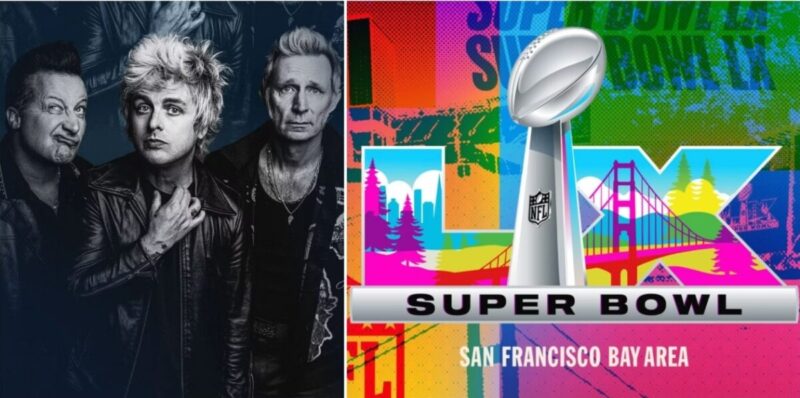
NFL Adds Green Day To Super Bowl
For decades, the Super Bowl has served as one of the last remaining cultural campfires around which Americans of all stripes gather — not for politics, not for protests, not for lectures, but for football. Whether you’re a diehard fan or just in it for the wings and commercials, the game is supposed to be a few hours of shared spectacle, an annual tradition bound together by touchdowns and halftime theatrics.
But year after year, the NFL seems increasingly intent on muddying that experience with a steady stream of virtue signaling, political posturing, and baffling entertainment choices that feel more like acts of cultural provocation than celebration.
It wasn’t bad enough that the NFL picked an anti-American performer nobody heard about for their halftime show.
Now they picked “Green Day” a washed up band that literally bashes America and Trump at every concert, to open the Super Bowl.
Roger Goodell is a TDS Clown pic.twitter.com/Xwkg9RqyZI
— Vince Langman (@LangmanVince) January 19, 2026
Enter Super Bowl 2026, and the latest head-scratching decision from Roger Goodell’s league office: handing over the musical keys to Green Day, a punk band whose anti-American outbursts have long been standard fare, and Bad Bunny, a rapper whose name alone sparked confusion or groans depending on the listener. While football fans were hoping for a halftime show that brought energy without baggage, what they got was a lineup that seems engineered to alienate rather than unify.
Let’s start with Green Day. Yes, some of their catalog is undeniably catchy. “Holiday” and “When I Come Around” remain staples of 2000s alt-rock nostalgia. But those same chords are now layered with years of pointed political rhetoric, most of it directly hostile toward a large swath of the NFL’s core audience. Frontman Billie Joe Armstrong has repeatedly disparaged President Trump and his supporters — not in measured terms, but in the language of slurs and comparisons to dictators.
He’s called America “f***ed,” vowed to renounce his citizenship, accused the nation of fascism, and more recently altered lyrics mid-performance in a thinly veiled endorsement of a cause tied to anti-Israel extremism. That’s not edgy. That’s divisive.
And yet, this is the band the NFL thinks will help “bring the country together” for its most-watched event of the year?
Let’s be clear: no one expects halftime performers to be apolitical robots. But there’s a difference between having a worldview and being explicitly antagonistic toward half the country. The NFL’s decision to feature artists like Green Day, who have made a career out of mocking the very people who keep the sport profitable, feels less like oversight and more like a dare.

The NFL just announced that Green Day, led by Trump-hater Billie Joe Armstrong, will perform at the Super Bowl opening ceremony.
This + No English speaking Bad Bunny.
The NFL is completely betraying their audience.
pic.twitter.com/55kra8QCEm— Jack (@jackunheard) January 19, 2026
When the league painted “End Racism” in the end zones or allowed players to wear vague, bumper-sticker messaging on their helmets — “Choose love,” “Stop hate,” etc. — many fans rolled their eyes and let it slide. But the cumulative effect is clear: football is no longer just football. It’s football with an asterisk. And the asterisk always comes with a lecture.
For an institution that thrives on broad appeal, the NFL is playing a risky game. It may not suffer immediate viewership loss — the Super Bowl is still the biggest ticket in American sports. But slowly and steadily, it’s eroding the sense that this is our game, not their platform.
If Green Day uses their stage time to sound off again about Trump, about Israel, or about how much they dislike the country giving them this spotlight, Goodell and company will only have themselves to blame. After all, when you choose performers known for going off-script, don’t be surprised if the script gets torched — along with a little more of your credibility.
There’s still time to pivot. The NFL doesn’t have to surrender the last bastion of unifying entertainment on television. It could go back to what works — music that excites, teams that play, and a show that celebrates competition rather than ideology.