
NASA Is Counting Down For Historic Mission
After more than five decades, NASA is once again on the edge of sending humans toward the moon, and this time the mission carries both technical weight and a quiet sense of unfinished business.
Artemis II, scheduled for launch Wednesday evening, is not a landing attempt but a carefully planned return to deep space—a ten-day journey designed to prove that the systems built for this new era can carry astronauts safely beyond Earth orbit and back again.
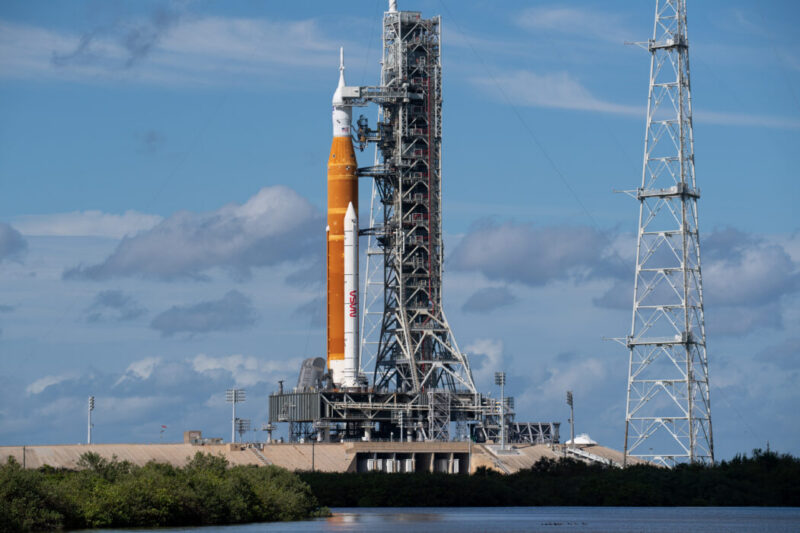
At the center of it all is the Space Launch System, a towering 32-story rocket that has endured months of delays, scrutiny, and mechanical setbacks. The most recent issues—hydrogen fuel leaks followed by a clogged helium pressurization line—forced engineers into a familiar cycle of rollback, repair, and retesting.
Each fix pushed the timeline further, but also added another layer of validation. Now, with the rocket back on the pad and systems reportedly stable, mission managers are signaling a level of confidence that had been elusive earlier this year.
The flight plan itself is direct. After reaching orbit, the Orion capsule will break away and head straight for the moon, looping around it without attempting a landing. There are no docking maneuvers, no surface operations—just a high-speed arc through deep space and a controlled return to Earth, ending in a Pacific splashdown. It’s a mission defined by precision rather than spectacle, where success depends on every component performing exactly as intended over nearly ten days.
The crew reflects a shift from the Apollo era, both in composition and in how NASA frames the mission. Victor Glover, serving as pilot, has spoken openly about the visibility of the moment—how representation resonates with younger audiences who see themselves in roles that were once narrowly defined.
At the same time, he has pointed toward a future where those distinctions fade into the background, where participation in spaceflight is no longer framed as a series of “firsts.”

That tension—between historic milestones and normalization—is woven into Artemis II. It is both a return and a reset. The last time humans traveled to the moon, the program ended not long after. This time, NASA is attempting to build continuity, using Artemis II as a stepping stone toward longer missions and eventual landings.
For now, the focus remains fixed on launch. Weather forecasts are favorable, the vehicle is cleared, and the countdown has begun. After years of development and repeated delays, the margin for error narrows to a single window—one opportunity to send humans back into a part of space they have not visited since 1972.